A blackwork tattoo works exclusively with solid, undiluted black: clean lines, solid fills and deliberately bare skin doing the job that shading does in other styles. Whether a piece like that heals deep black or patchy is decided mostly at the needle – depth, saturation, speed – and in the first two weeks after. That's what this post is about.
What is a blackwork tattoo – and what isn't?
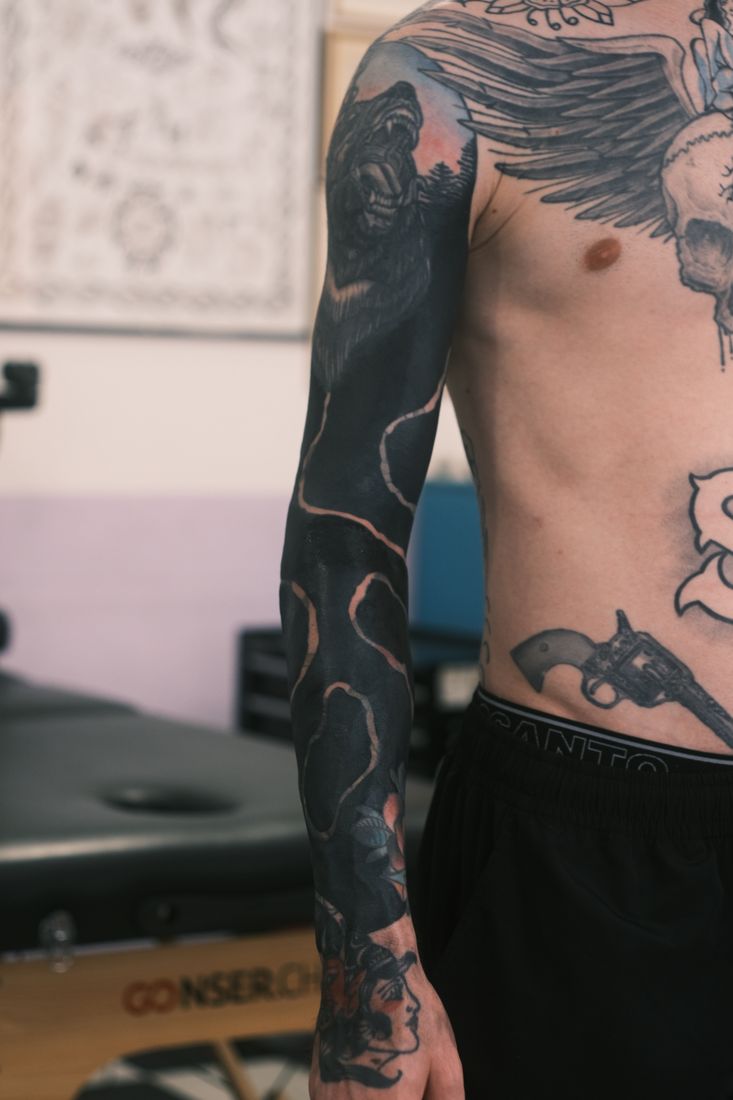
Blackwork means black only, undiluted. The style is built on contrast: solid fills and clean lines on one side, deliberately empty skin on the other. The bare skin plays the role that shading plays in other styles.
A few terms get mixed up constantly:
- Black-and-grey works with many shades of grey – black diluted or mixed with white. Most chicano tattoos, for example, are black-and-grey.
- Blackout is blackwork's extreme form: entire body areas fully saturated in black. More on that further down; it's its own decision with its own rules.
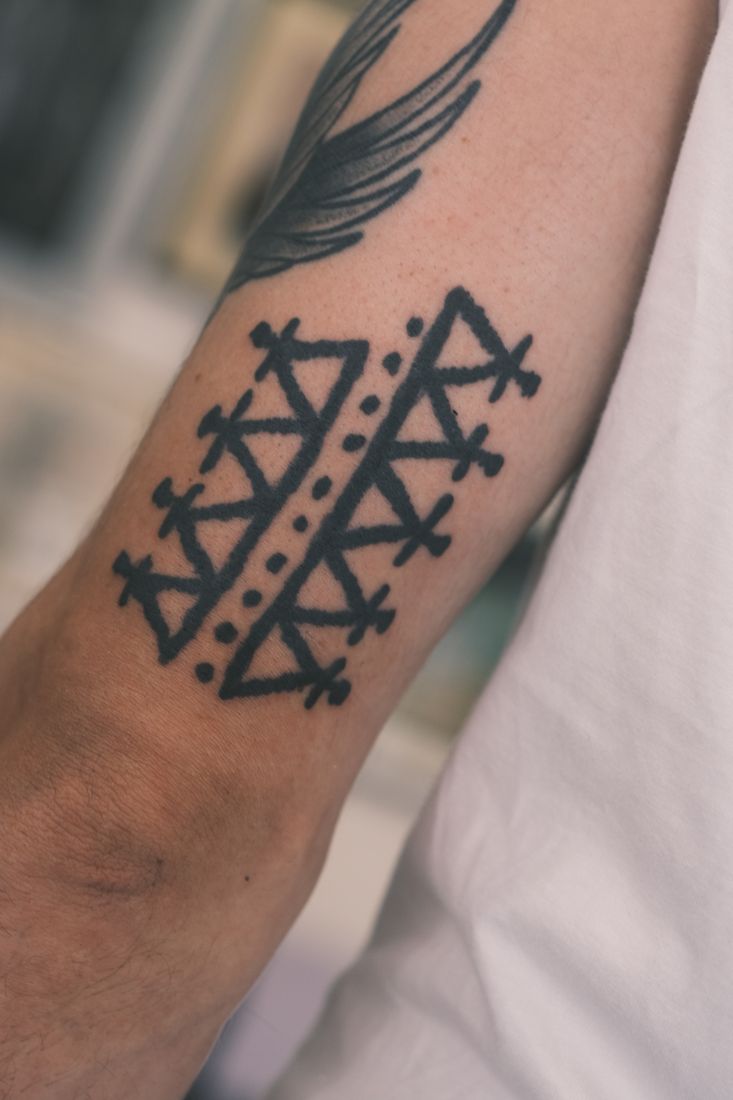
- Geometric and ornamental can be blackwork: geometric patterns and ornaments in solid black. Dotwork, on the other hand, is its own discipline: built dot by dot instead of packed solid – a completely different technique. Fine line is the other end of the scale: thin lines carrying very little pigment mass.
I work in three styles: blackwork, traditional and fine line. Which matters to you for one reason – I won't push the style I happen to offer. The one that fits the design and the placement wins.
Why do some blackwork tattoos heal patchy while others stay solid?
The short answer: it's usually experience – or the lack of it. Patchy healed black almost always has one of three causes: ink sitting too shallow, so it grows out with the renewing skin; skin that was overworked during the session; or mistakes in the first two weeks of healing. (Ink that goes too deep is its own story: it doesn't make a tattoo patchy, it makes it blurry – that's a blowout, more on that below.)
Honesty cuts both ways here: skin isn't paper. Placement, skin type and your aftercare all play a part, and not every light spot is malpractice: some placements are simply hard to work, and a client who tenses up or moves changes the conditions. Experience massively raises the odds of a solid heal. Nobody honest guarantees it.
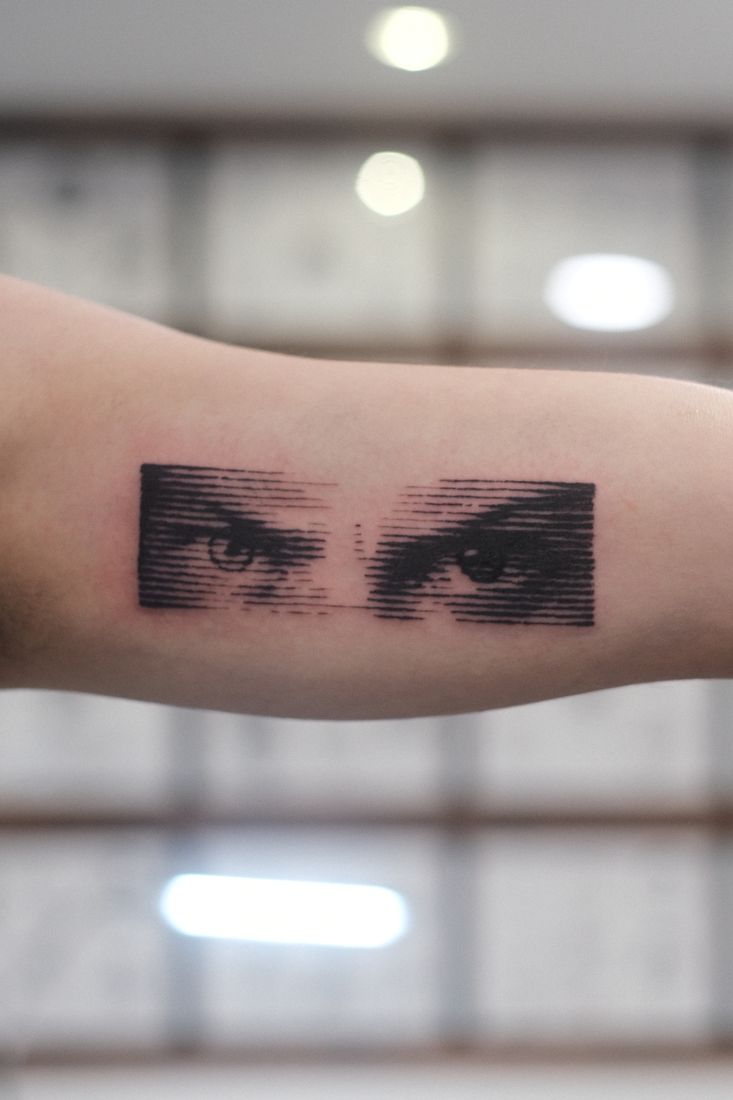
How deep does a tattoo needle actually go?
Ink holds in exactly one place: the dermis, the second layer of skin – roughly one to two millimetres down, depending on body area and skin type. The dermis is dense, fibrous connective tissue; pigment stays where it's put. In practice nobody works with a ruler: depth is feel, skin tension and experience.
Too shallow and the pigment sits in the epidermis, which renews itself constantly. Whatever is up there leaves with the shed skin; the piece reads patchy and washed out within weeks.
Too deep and the ink lands in the subcutaneous layer, which is fat and loose tissue. Pigment has nothing to hold onto there – it spreads. That's a blowout: soft, blurred lines with a greyish shadow beside them. A blowout can also happen at the correct depth if the needle angle is too steep. And it happens most easily where skin is thin – over the ribs, for example.
The nasty part: too shallow can be touched up. A blowout stays. That's exactly why depth control on big black fields is the core skill: every mistake is on permanent display.
What is "overworked skin" – and what does speed have to do with it?
Overworked skin is skin that's been gone over more times than the tissue can cleanly handle. The tricky part: during the session you can barely see it. Heavier bleeding, swelling or redness can have many causes and by themselves say nothing about overworking. What counts is whether the skin is still taking ink – and that's exactly where the vicious cycle starts:
- The skin stops taking ink.
- So you go over it again.
- The tissue takes more trauma, the swelling increases.
- The skin takes ink even worse. Past a certain point, it simply stops cooperating.
Usually you only see overworked skin after the heal: patchy fills – and sometimes, up to two months later, scarring. It can be the whole tattoo, individual fills, or individual sections in spots that are hard to work – the crook of the elbow, for example.
The goal is therefore one clean pass: right depth, right technique, matching hand speed – instead of grinding the same spot five times. Hand speed isn't showing off, it's arithmetic. Too fast, and the needle lays down too little pigment: gaps that force a second pass – and done wrong, too much speed can genuinely rip the skin up. Too slow, and the same spot gets punctured more often than necessary. Both roads end in the same place: overworked skin.
This is where speed comes in. Speed doesn't mean rushing: it means machines built for fast, hard work and a technique that's dialled in, so your tattoo gets done in fewer passes. Fewer passes means less trauma, a cleaner heal and less time on the table. A decent-sized arm piece finished in 15 minutes is, admittedly, also a party trick.
And when the skin eventually stops playing along anyway – irritated, swollen, no longer taking ink – the professional response isn't to push through. It's to stop. A clean second pass four weeks later beats any forced finish. That's why big projects get planned in stages instead of muscled through.
What machines and needles does solid blackwork actually take?
My drawer runs from 1RL to 49M. A 1RL is a single needle, for lines you can barely see from two metres away. A 49 magnum is a bundle of forty-nine needles in two rows, built to saturate big fields in a handful of passes. Between those two extremes lies the difference between fine line and blackout.
A magnum is the standard configuration for filling: two offset rows of needles that lay down a lot of ink evenly per pass. On a curved magnum, the outer needles are bent slightly back: the edges penetrate less deeply, which softens transitions and spares the skin at the borders. And the simplest arithmetic of all: a big magnum covers more skin per pass. Fewer passes, less trauma, thinner scabbing, more solid healed black. Needle choice is the first decision about the final result, and it's made before the machine is even switched on.
On machines, the number that matters is the stroke: how far the needle travels up and down. Short stroke: fast and soft, minimal trauma, ideal for fine lines and soft shading. Long stroke: slower per hit, but hard – the ink goes in on one pass. That's why there's never just one machine on my table: hybrid rotary machines built for fast, hard packing of large fields, and soft-hitting machines for fine line. Not because one is better than the other: they have different jobs.
The best machine, in the end, is the one that fits the artist's hand. Everything else is marketing.
What's actually in tattoo ink – and what do the EU and Swiss rules mean?
REACH-compliant means the ink meets EU Regulation 2020/2081, which has strictly limited what can be in tattoo inks since January 2022. The part that surprises people: there is no official list of "approved safe" tattoo inks – Switzerland's federal food safety office (BLV) says so itself. Certain ingredients are banned; responsibility sits with the manufacturer, and explicitly with the tattooer too. Which ink gets opened at your appointment is a deliberate studio decision, not a formality.
For black this regulation matters more than for any other colour: black ink is built on carbon black pigment, and its classic risk is contamination with polycyclic aromatic hydrocarbons (PAHs). The regulation caps each classified PAH at 0.5 mg/kg, and benzo[a]pyrene at just 0.005 mg/kg. That's five parts per billion.
The same limits have applied in Switzerland since 1 February 2024 – the ordinance details are in the sources below – and since 1 February 2025, inks that only meet the old rules may no longer be manufactured or imported, though existing stock may still be used up. Which is exactly why it matters which bottle actually gets opened at your session.
The good news: you can check. Every compliant bottle carries the statement "Mixture for use in tattoos or permanent make-up", a batch number and the full ingredient list. And you have the right to see that information on request. In any studio.
For me the answer is simple: I work exclusively with REACH-compliant inks. For black, that means: Black Gold by Panthera from Italy, a deep, dense packing black, and Eclipse, a specialist European-made black for lining, shading and large solid fills. That's not a miracle claim and not a health guarantee – it's the baseline I won't start without.
How does blackwork age – and why do old black tattoos turn blue-grey?
The ink doesn't change colour – it thins out. Over the years pigment disperses slightly in the tissue, some of it is carried away by the body, UV breaks pigment down, and spots worked too shallow or unevenly lose density first. That a tattoo lasts decades at all is down to cells in the dermis that lock the pigment in and hand it on to their successors when they die, neatly documented in a study in the Journal of Experimental Medicine (2018).
Then there's physics: dark pigment sitting deep in the skin scatters short blue wavelengths back more strongly than red – the same physics that makes veins look blue. That's why fresh black often reads blue-grey once the new skin layer grows over it, from about week one. Underneath, the black is unchanged. And it's why very old, thinned-out black drifts towards blue-grey or green. On older tattoos, the inks of the time make it worse – the trade considers them the main explanation: low pigment density, often built on a very dark blue or green base. That's a story about old ink and old technique – not about black itself.
What remains is a simple rule from my own practice: work built on mass and contrast stays readable. Work built on fine detail loses first. Fine line isn't worse: it carries less pigment mass, so it loses definition sooner. I tattoo both, so I tell you this before, not after. And the biggest single factor is you: sunscreen on the healed skin – SPF 30 or higher, consistently – is the most effective measure there is.
How long does a blackwork tattoo take to heal? Week by week
Days 1–3: The area can be red, warm and slightly raised – but it isn't always. What weeps out is wound fluid: blood, plasma and excess ink. And the tattoo looks extra black right now. Don't get attached to that depth – it belongs to the fresh wound, not the healed result.
Weeks 1–2: The skin scabs lightly and starts to peel. On big black fields it sheds in thick, jet-black flakes. It looks dramatic, as if the tattoo were coming off. It isn't: the pigment that stays sits in the dermis, well below the layer that peels. This is also when the itching peaks. The one rule that counts: ignore it. Don't scratch, don't pick, don't rub it off – just leave it alone.
Weeks 3–4: Depending on your skin, the tattoo is now healed on the surface. That doesn't mean it's done: the deeper layers keep working for months.
The final result shows at around four months – that's when I judge a large piece. And if a spot does need a second pass at that point: a touch-up on a large fill is normal, not a failure. Skin doesn't take pigment evenly everywhere.
The aftercare basics
- Morning and evening, wash it with clean hands, let it air-dry, then apply a very light layer of healing ointment (Bepanthen, for example).
- Showering: yes. Baths, swimming, sauna, hot tubs: no, until it's fully closed.
- While it heals, no sunscreen on the tattoo – cover it with clothing and stay out of the sun. SPF goes on healed skin only, and from then on consistently: SPF 30 or higher.
- We'll go through your exact aftercare at the appointment – it's personalised, and it overrides any general tips, including this post.
What's not normal
The simple rule – and the American Academy of Dermatology puts it the same way: normal symptoms get better day by day. Signs of infection get worse day by day. Not sure whether something is part of normal healing? DM me first, ideally with a photo – I'll tell you whether it's fine or worth having looked at. Go straight to a doctor for: persistent fever or chills, pus or open sores, redness that spreads instead of fading, pain that increases instead of easing, or red streaks running from the tattoo towards the centre of the body.
How much does blackwork hurt?
Nobody can tell you that – me included. Pain is different for every body, and different on every day. The pain charts you find online, with their numbers per body part, are made up. Trust no chart: trust yourself, and listen to your body.
How a session goes is individual too. Some people breeze through the first half and struggle at the end; for others it's the reverse – hour three can be better than hour one. What I can say: big solid fills demand more than linework, because the same skin gets worked until it's fully saturated. That's why I plan big pieces in stages, and why working fast matters for pain too: it's simply over sooner. It's manageable: we take breaks whenever you need them. Eat well beforehand and get a good night's sleep.
Is a blackout tattoo a good idea? An honest look
Blackout is blackwork taken to its logical extreme: entire areas, fully saturated. I do both: as a statement on blank skin and as a cover over old tattoos, from a forearm to full-body projects. Done right and cared for right, it heals clean: none of my blackouts so far has left scarred skin behind – I'll happily show you healed examples.
And this is where everything belongs on the table, before you book:
- It demands a lot. Full saturation means working the same skin repeatedly. Blackout sessions are more intense than regular appointments. Big projects are planned in stages with healing breaks in between.
- Expect noticeable swelling in the first few days. A short fever isn't unusual with large pieces; if it persists, have it checked. Elevate, cool, rest – this is not an appointment you follow with a gym session the next day. On the surface, blackout heals like any tattoo in three to four weeks; until everything has truly settled, it can be months.
- Treat it as final. Black generally responds well to laser, but with a blackout the problem isn't the colour, it's the sheer amount and area: many sessions, a lot of money, a lot of pain, and scarring or grey residue can remain. Switzerland's federal office (BLV) states it plainly: tattoo removal is painful, expensive and not always complete.
Which is why every blackout project at my studio starts with a conversation, not an appointment.
Why I never tattoo over moles
I never tattoo over moles – blackout included. I design around them or leave them out, and in the finished piece you usually can't tell.
The reason is simple: moles are monitored for changes in size, shape, colour and border. Those changes are the early-warning signs of skin cancer, and ink on top hides them. This isn't about tattoos causing skin cancer. It's about ink hiding the signs you'd use to catch it early. Dermatologists – and honest tattooers – recommend exactly this: keep moles visible.
There's a craft reason too: moles bleed more freely, take ink unevenly, and raised moles make consistent needle depth impossible. From a technical standpoint, a mole is also the worst spot in the entire design. If you're planning a large-scale piece and have a lot of moles, have your skin checked by a dermatologist first. That's the one appointment that matters more than the one with me.
Can blackwork cover up an old tattoo?
Black covers what nothing else covers. That's why blackwork is the classic cover-up style. Ornaments, geometric patterns and solid fields swallow old lines that would ghost through lighter covers. But there are limits: very dark, dense or scarred old tattoos need a carefully thought-out design, sometimes a round of laser lightening beforehand is the better foundation, and in extreme cases an honest blackout panel is the realistic option.
What I need is a clear photo of the spot – easiest by Instagram DM. Then I'll tell you straight what can be covered or extended, and what can't. An honest no beats a cover that ghosts back through in two years.
And not everything needs covering: often an old or badly done tattoo can be reworked instead – lines redrawn, black re-saturated, contrast brought back. The design stays, it just looks new and clean again. Cover, rework or both: the best place to figure that out is the free consultation.
How do you vet a blackwork portfolio before you book?
Blackwork is the most unforgiving style there is: on a solid field you see every flaw – patchy spots, wobbly edges, uneven saturation. Use that to your advantage:
- Ask for healed work. When it's fresh, almost anything looks good. The truth shows at around four months. An artist who can't or won't show you healed examples is a red flag.
- Look at the fields: evenly matte and dense, no pale spots?
- Look at the edges: clean and calm, no fraying, no grey shadow alongside?
- Look for consistency: a good portfolio holds the same standard across many pieces – not one lucky hit.
- And listen to the consultation: someone who promises you everything isn't advising you – they're selling to you.
You'll find my work in the gallery and on Instagram, and I'll show you healed examples when we talk.
How much does a blackwork tattoo cost in Zurich?
At my studio: from CHF 150. The final price depends on four things: size, tattooing time, preparation time and placement. Placement isn't a surcharge, it's simple geometry: a 10 cm tattoo on your ribs is a 20 cm tattoo once the skin is stretched – and stretched is how I tattoo it. A CHF 100 deposit (via TWINT) secures your appointment and is deducted in full from the final price. You can cancel up to 48 hours before your appointment.
And since time is the biggest cost factor, efficient work pays off twice: a field that gets saturated in fewer passes takes fewer hours – and heals cleaner.
Consultations are free, with no obligation. Come in with your idea, we'll look at design, placement and size together, and you get an honest assessment including a price range. Whether you book afterwards is entirely up to you. German or English – both fine. Quickest way in: DM me on Instagram – or use the enquiry form.
Common questions about blackwork
Do blackwork tattoos fade?
Every tattoo ages – solid black just does it most legibly. Properly saturated blackwork with quality carbon-black ink stays readable for decades; sun, constant friction and thinly worked pieces fade fastest. Anyone promising "never fades" is selling you something.
Why did my black tattoo heal patchy?
Usually one of three things: ink too shallow (grows out with the renewing skin), overworked skin (it heals patchy or scarred), or picking and soaking during the heal. Depth control and clean one-pass saturation are what experience gives you.
Why do black tattoos turn blue or grey over time?
The ink doesn't change colour – it thins out. Pigment disperses over the years, UV breaks it down, shallow spots lose density first, and deep-sitting dark pigment scatters blue light back – the same physics that makes veins look blue. On very old tattoos, the inks of that era are a big part of the story.
How long does a blackwork tattoo take to heal?
Surface: three to four weeks, depending on your skin. Fully settled: several months. Solid black sheds in big, dark flakes – that's normal. The final result shows at around four months.
How much does a tattoo cost in Zurich?
At my studio, from CHF 150, depending on size, tattooing time, prep time and placement. A CHF 100 deposit via TWINT secures the appointment and is deducted in full from the final price. You'll get a clear price range at the free consultation.
Can you tattoo over a mole?
Not at my studio – ever. Moles need to stay visible because their changes are the early-warning signs of skin cancer. I design around them or leave them out; in the finished piece you usually can't tell.
Do blackout tattoos hurt more?
Usually yes – how much varies from person to person. The same skin gets worked repeatedly until fully saturated, and sessions are long. That's why big blackout projects are planned in stages, with breaks whenever you need them.
How much does a tattoo consultation cost?
At my studio: nothing. Consultations are always free, with no obligation – bring your idea, we'll figure out the rest together.
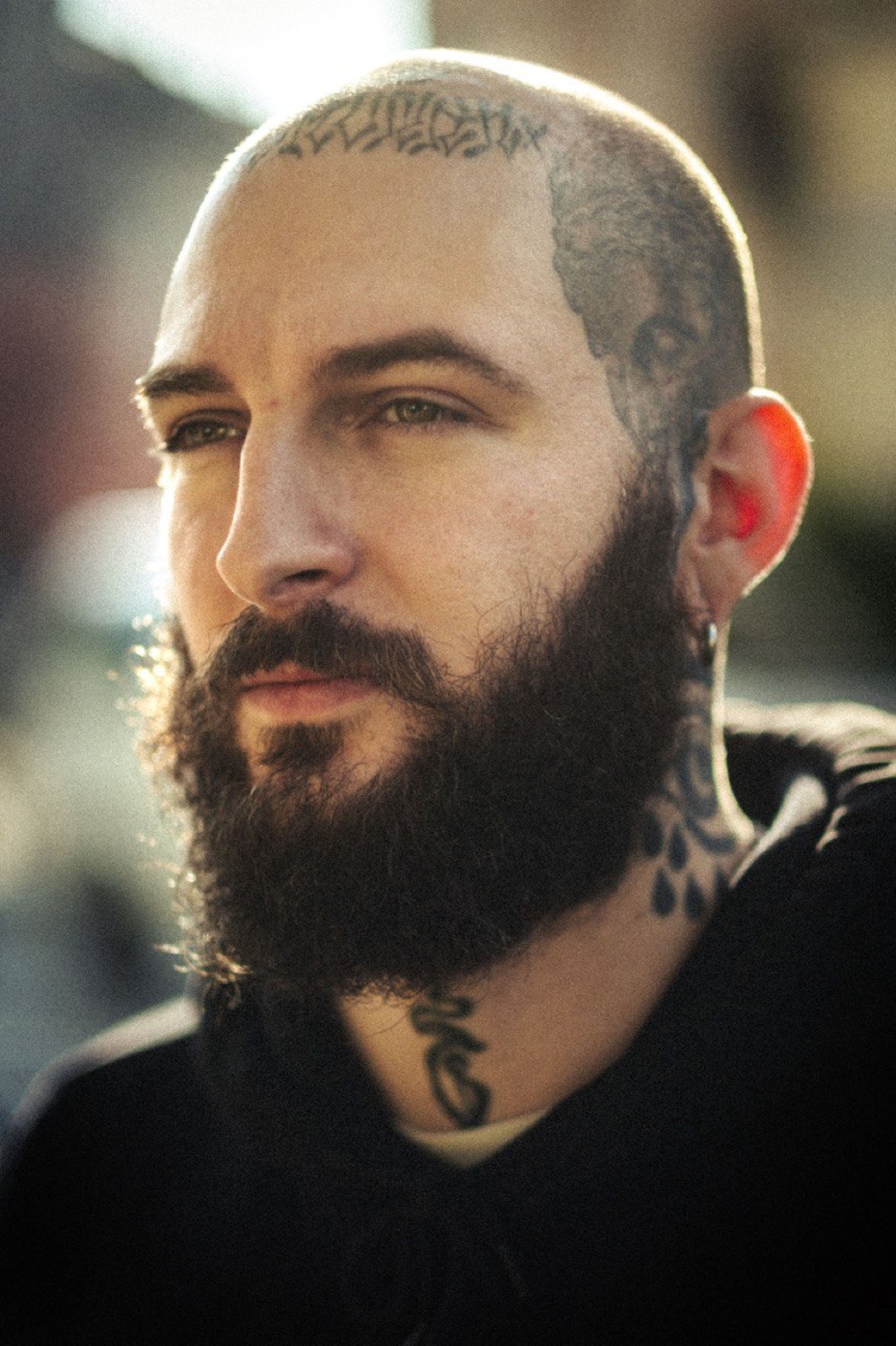
Tattoo artist at Love Street Tattoo, Badenerstrasse 246, Zürich Kreis 4. Since 2018, 2,000+ tattoos. Blackwork, traditional and fine line, in English or German. @tomturbotattoo
Sources on healing and skin health: American Academy of Dermatology, Cleveland Clinic, Swiss BLV, Baranska et al., Journal of Experimental Medicine (2018). Regulation: SR 817.023.41, EU Regulation 2020/2081. Technique, tools and process: my own practice since 2018. This post is not medical advice – if something's wrong, see a doctor or dermatologist.